
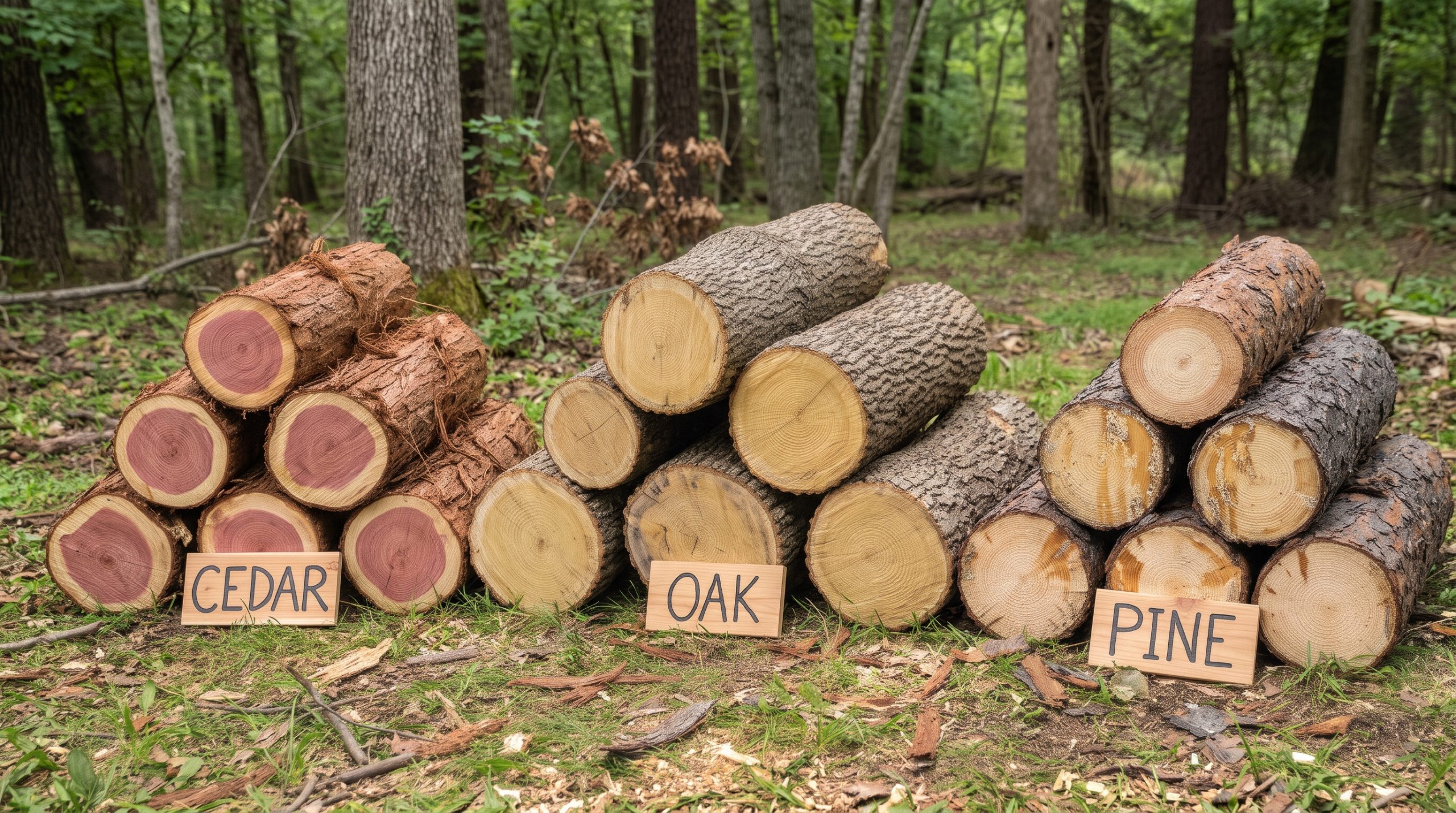
Choosing the right wood species is one of the most important decisions you will make when building a log home. Your floor plan shapes how you live today. The wood species shapes how the home performs, ages, and holds value over 30 years.
For buyers comparing log home builders, log cabin manufacturers, and custom log cabin homes, these differences matter even more.
As the only manufacturer offering Oak, Eastern White Pine, Cypress, and Cedar log homes—and America’s largest manufacturer of Oak log homes since 1977—Gastineau Log Homes has seen how each species behaves across thousands of builds nationwide. Here is how Oak, Pine, and Cedar compare on the three issues that matter most over a 30-year span: settling, insect resistance, and long-term maintenance.
- Settling, Checking, and Structural Stability
All solid wood logs dry, shrink, and settle after construction. Properly built log homes allow for this movement around window and door openings, interior walls, and vertical beam supports.
Wood density and drying method make a big difference in how much checking and movement you see over time.
|
Wood Species |
Density & Strength |
Checking & Shrinkage |
30-Year Performance |
|---|---|---|---|
|
Oak |
Very dense and heavy; supports longer spans for header logs and floor beams. |
Slow, 5-month solar-kiln drying helps logs dry evenly to the center and cuts severe checking. |
Tightens into the wall profile during the first two years and holds fasteners without pull-through. |
|
Eastern White Pine |
Softer and lighter than oak; works for standard spans. |
More likely to show deeper checks and more shrinkage as it seasons. |
Needs close attention to caulk joints and upward-facing checks to keep water out. |
|
Cedar |
Light softwood; lower load capacity means shorter spans for beams and headers. |
Relatively size-stable, though softer grain can tear or splinter during milling and fastening. |
Holds its shape well, but span and fastener grip are more limited than with dense hardwood. |
The 30-Year Takeaway: Oak is dense, so screws and lag bolts stay set as the home ages. Clean milling removes water-catching ledges, and full solar-kiln drying helps the wall settle tighter two years after move-in than on framing day.
- Natural Insect and Decay Resistance
Over a 30-year span, your exterior walls face moisture, wood-boring insects, and fungal decay. Many people think all cedar is naturally bug-resistant, but the real issue is heartwood versus sapwood.
- Oak: Oak has a very thin outer sapwood ring. When 12 to 15 inch diameter logs are milled into standard 8 inch wide cants, that soft outer sapwood is removed. What remains is dense heartwood that resists insects and decay without chemical treatment.
- Cedar: True cedar heartwood is naturally insect-resistant, but much of the cedar used in modern log construction comes from smaller, younger trees made mostly of sapwood. Cedar sapwood offers no more resistance to insects or rot than standard pine.
- Pine: Eastern White Pine is valued for its classic look and ease, but it lacks the natural chemical defenses of oak heartwood. Over three decades, pine depends on regular preservatives, borates, and sealing schedules to fight insects and moisture damage.
- Maintenance Over 30 Years
Every log home needs regular exterior care—cleaning, checking caulk joints, and reapplying stain or sealant—to protect the wood from UV rays and weather. Over 30 years, the wood species you choose has a big effect on the labor involved.
- Oak: Oak mills cleanly without tearing or splintering, and it resists severe checking. That gives you a smoother, more even surface that holds finishes well and is easier to maintain. A precision-milled log and a dedicated exterior caulk channel, backed by a lifetime caulking warranty, help keep air and water out of the joints for the long haul.
- Pine: Pine tends to develop deeper checks over time. Homeowners must spend more time inspecting and resealing splits, especially on sun- and rain-exposed walls, so water cannot pool inside the log and cause rot.
- Cedar: Cedar accepts stain easily, but it is softer wood. Pressure washing or heavy media blasting during 10- or 15-year restoration cycles can raise the grain or wear down the fibers faster than dense oak.
Which Log Species Is Right for Your Legacy?
If you want a traditional softwood look and are comfortable staying on top of routine preservative and caulking schedules, Eastern White Pine and Cedar remain classic choices—especially when paired with proper roof overhangs and an engineered wall system. But if you want maximum strength, chemical-free heartwood durability against insects, and lower maintenance over 30+ years, Oak stands in a class of its own.
Ready to compare wood species in person? Visit Gastineau Log Homes’ National Model Home Center on I-70 in Missouri, ask about log home kits in Missouri, explore custom floor plans, or contact our team at 1-800-654-9253 to request a free copy of The Gastineau Guide and start planning a home built to last for generations.
Q&A
Question: Why does Oak settle differently than Pine or Cedar in a log home?
Short answer: Oak’s density, fastener-holding strength, and slow 5-month solar-kiln drying help reduce severe checking and movement. According to the article, an Oak wall system can settle tighter into the wall profile over the first two years, while Pine is more prone to shrinkage and Cedar has more limited fastener grip because it is a softer, lighter wood.
Question: Is Cedar always naturally resistant to insects?
Short answer: No. The article explains that Cedar’s insect resistance depends on whether the log contains heartwood or sapwood. True Cedar heartwood is naturally insect-resistant, but much of the Cedar used for log construction comes from smaller, younger trees with more sapwood, which offers no more resistance to insects or rot than standard Pine.
Question: Why is Oak described as having chemical-free heartwood durability?
Short answer: Oak has a narrow outer sapwood ring that is removed when 12 to 15 inch diameter logs are milled into standard 8 inch wide cants. What remains is dense heartwood, which is naturally resistant to insects and decay without relying on chemical treatments.
Question: Which wood species requires the most maintenance attention over 30 years?
Short answer: Based on the article, Eastern White Pine generally requires more ongoing attention because it can develop deeper checks over time. Homeowners should check and reseal cracks often. This is especially important for walls that get sun and rain. It helps stop water from pooling inside the logs and causing rot.
Question: When might Pine or Cedar still be a good choice?
Short answer: Pine and Cedar can still be strong choices for homeowners who prefer a traditional softwood look and are willing to follow routine preservative, staining, sealing, and caulking schedules. The article also notes that proper roof overhangs and an engineered wall system are important for long-term performance.
